
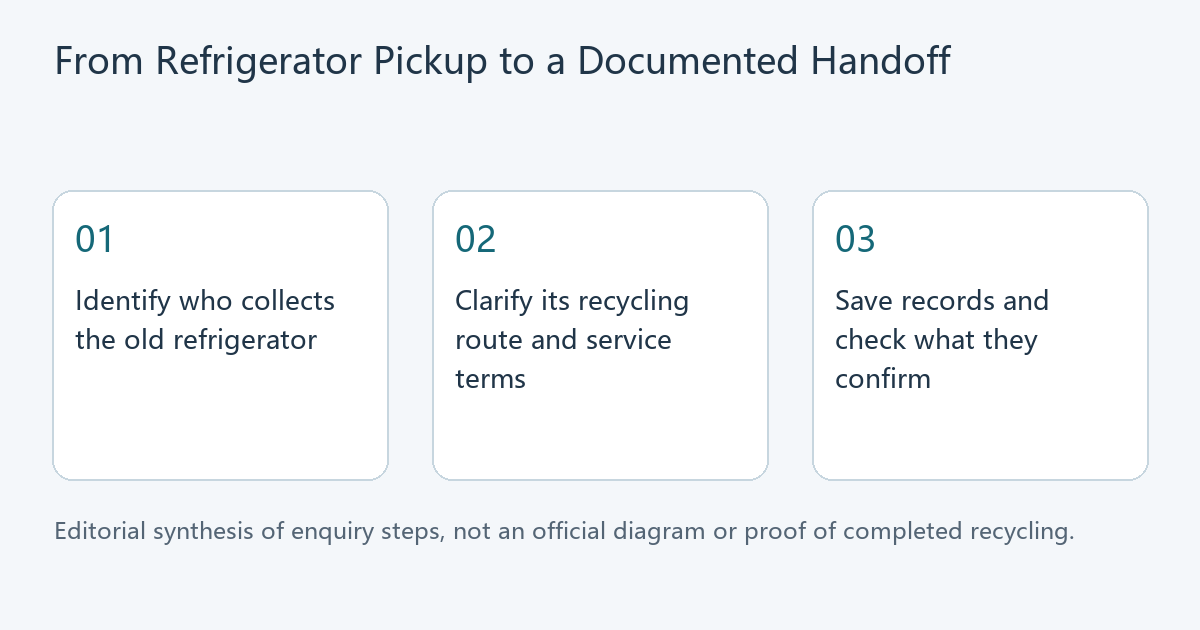
Before committing to a replacement refrigerator, ask about both removal and the destination of the old appliance. Treat pickup as the collection arrangement, not sufficient evidence of recycling. Request a written explanation of who collects it, where it goes, what the service includes and what confirmation you can receive. These are editorial planning questions, not official requirements or a guarantee of proper handling.
ENERGY STAR’s refrigerator guidance says many appliance retailers collect and recycle an old refrigerator when a customer purchases a new one. That makes the retailer a useful starting point, but it does not establish the service offered with your particular order.
Ask what happens after collection
The ENERGY STAR recycling guidance explains that refrigerators contain refrigerants, oils and other compounds that federal law requires to be removed and recovered before materials can be recycled. It advises asking retailers for assurance that an old unit will be properly recycled rather than resold as an inefficient second-hand appliance.
For your decision, separate three answers: the collection promise, the intended recycling route and the evidence available afterward. A clear answer to one does not automatically settle the other two. Written information helps you compare arrangements; it is not independent verification of what ultimately happens.
A worksheet to use before ordering
Copy these questions into an enquiry to the seller or collection provider. Record the answer, who supplied it and the date. The suggested next steps below are an original editorial checklist, not a statutory documentation standard.
| Ask | Record | If unresolved |
|---|---|---|
| Who will collect the old refrigerator? | Collector’s business name and the contact responsible for the booking. | Ask the seller to identify the collector before relying on removal. |
| Where will it go after pickup? | Named receiving business or facility, if available, and whether intermediate storage or transfer is planned. | Request a destination explanation, not just a collection date. |
| Is the arrangement recycling or possible resale? | The provider’s description of the intended route and any stated exceptions. | Clarify the outcome rather than interpreting a general environmental claim. |
| What does the quoted service include? | Total quoted charge, included work, exclusions and cancellation terms. | Keep unanswered costs separate from the confirmed purchase price. |
| What collection conditions apply? | Provider-issued preparation instructions, access conditions and appointment details. | Ask for instructions; do not invent disconnection or handling steps. |
| What confirmation is available? | Whether you can receive a pickup receipt, receiving-facility acknowledgement or other record, and what each actually confirms. | Distinguish proof of removal from evidence about subsequent processing. |
Turn the answers into a decision
- Collection clear, destination unclear: the removal plan may answer your space problem, but your recycling question remains open. Ask a follow-up before describing the arrangement as documented recycling.
- Route described, terms unclear: clarify charges, access and scheduling before making the purchase dependent on that service.
- Route and terms described, confirmation limited: decide whether the available assurance meets your needs. Do not treat a promised receipt as evidence already received.
Hypothetical example: one seller offers old-appliance removal but provides no destination information. Another supplies a collector’s name, an intended receiving facility and written service terms. The second offer gives you more information to assess; it does not prove that recycling has occurred or that its environmental performance is better.
If the retailer cannot answer
The official recycling page also identifies utilities, energy-efficiency organizations, local waste management divisions and scrap recyclers as enquiry routes. It recommends looking for retailers partnered with EPA’s voluntary Responsible Appliance Disposal program. These are leads to investigate, not confirmation of a local appointment, eligibility, incentive or free service.
Use the same worksheet with another provider rather than accepting a different label as a complete answer. If a business cites a partnership, ask how it applies to your collection arrangement. Keep any promised benefit separate from the confirmed service terms.
Keep the handoff record—and its limits
Save the agreed terms and any records actually supplied. After collection, compare the receipt with what was promised: does it acknowledge only removal, or identify a further handoff? Follow up on missing information without assuming that silence proves either proper recycling or wrongdoing.
Source check date: October 7, 2026. This article uses supplied official-page captures, not a live service or verified availability check. No local fees, appointments, preparation rules or processing outcomes were verified. Recheck arrangements before ordering, and refresh this guidance if official advice or the provider’s route and terms change.

